Designing a landscape that complements your home’s architecture can be challenging for both experienced and inexperienced homeowners. Every home style has its own unique characteristics, as do its owners. To create a landscape setting that feels like your home is seamlessly nestled within, it’s essential to select each landscape feature thoughtfully.
Tips for landscaping to match your home’s style:
- Choose materials that reflect your home’s construction
- Carefully craft your landscape layout, selecting colors that reflect or contrast your home’s palette
- Match plant size to home size to maintain visual balance
- Emphasize your home’s style with your hardscaping choices
- Reinforce your design with pergolas, water or fire features, and garden elements
Designing a Landscape That Complements Your Home’s Architecture
Successful landscape designs pull cues from the home itself, including its architectural style, color, and proportions, so that both live in harmony rather than appearing as two separate projects within the space. How can you achieve this seemingly impossible feat? Whether you own a modern, ranch, Craftsman, or Mediterranean-style Bay Area home and prefer a minimalist, traditional, or eclectic design aesthetic, you can create a successful design that enhances your home and reflects your personality with intentional selection.
Choosing the Best Materials for Hardscaping, Features, and Furnishings
Reflect the materials used in your home’s construction in your outdoor living and landscape design to create a cohesive feel:
- Wood siding – wood elements in fencing, decks, and raised beds
- Brick homes – brick accents in your hardscaped pathways and planters
- Stucco homes – stucco decorative walls or planters
- Craftsman style – natural stone pathways and native plants
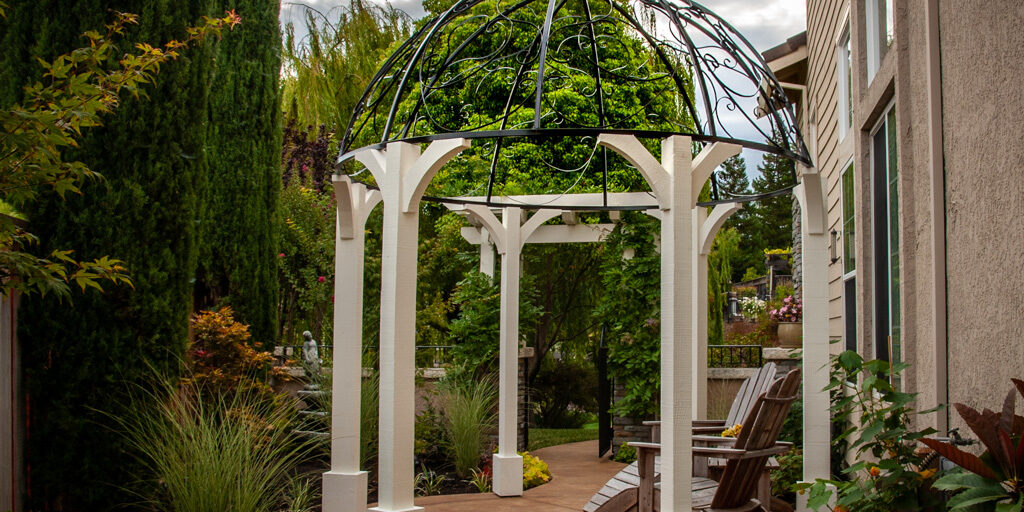
- Mediterranean – terra cotta planters and arched pergolas
Use consistent materials between the front and back yard so your property feels like a single, unified design rather than two separate spaces.
Thoughtfully Craft Your Landscape Layout
Landscape design involves more than just picking a few pretty plants. When selecting groundcover, flowers, trees, and shrubs, consider:
Climate
Choosing native, drought-tolerant plants for your yard’s sun exposure and climate zone ensures they’ll survive and thrive.
Color
Look to your home’s exterior colors, building an intentional color scheme to avoid a chaotic feel. Create harmony by choosing plants with hues that reflect your home’s exterior color palette or add vibrant flowers for a striking contrast to add excitement to your landscape design.
Garden style
Pair formal architectural styles like Tudor and Edwardian with symmetrical formal gardens and modern homes with minimalist landscaping and a limited, intentional color palette. Match cottage-style or Craftsman homes with an organic, mixed, layered planting style.
Seasonal interest
Ensure visual interest in every season with spring bulbs, annual summer flowers, and assorted evergreens.
Sightlines
Consider sightlines inside and outside your home and the flow from indoors to out.
Choose Plants that Suit Your Home’s Scale
Matching plant size to home size ensures visual balance. Large trees and leafy plants can dwarf a small home, while small plantings can make a large home’s landscaping look lackluster. Also consider shape: Homes with strong vertical lines such as narrow windows, tall gables, and turrets benefit from plants that mimic these features. Homes with low horizontal lines are better matched with wider, spreading plants.
Highlight Your Home’s Style with Hardscaping
Reflect features that define your home’s architecture with your hardscaping choices:
Traditional
- Brick, natural stone, or edged concrete pathways, patios, and decks
- Painted or stained wood picket fencing and lattice privacy screens
- Stone or brick retaining walls
Craftsman
- Earthy natural stone or wood pathways, patios, and decks
- Heavy stained timber fences with a stone base
- Timber retaining walls
Modern
- Large-format concrete slab and paver pathways and patios or smooth linear tile or composite decks
- Horizontal wood or metal panel fencing and privacy screens
- Smooth concrete or weathering steel retaining walls
Victorian or Edwardian
- Narrow brick, bluestone, or tile pathways and patios
- Painted picket fences, latticework privacy screens
- Retaining walls that support vining plants
Reinforce Your Home’s Architectural Style with Outdoor Structures
Outdoor structures should reflect your home’s materials, colors, and proportions:
Pergolas
To match a Victorian, Craftsman, or modern home, pergolas may be decorative, rustic timber, or simple and geometric.
Water features
Water features like fountains, ponds, or waterfalls offer the perfect opportunity to match decorative architectural details with stone, tile, or masonry while adding a touch of tranquility.
Fire feature
Fire features in brick, stucco, or natural stone offer an inviting focal point that can tie in perfectly with your home.
Garden elements
Birdbaths, sculptures, decorative planters, trellises, and more offer many opportunities to harmonize your landscape design with your home while showcasing your personal style.
Ensure a Landscape Design You Love for Years to Come
Designing a landscape that complements your home’s architecture doesn’t have to be difficult. Discover new ways to personalize and enhance your home with help from Past the Gate’s skilled luxury landscape designers. Contact us at 925-387-6731 to schedule a landscape design-build consultation in Walnut Creek, Berkeley, Palo Alto, Oakland, Napa, Danville, Orinda, Pleasanton, San Ramon, Moraga, or Alamo today.